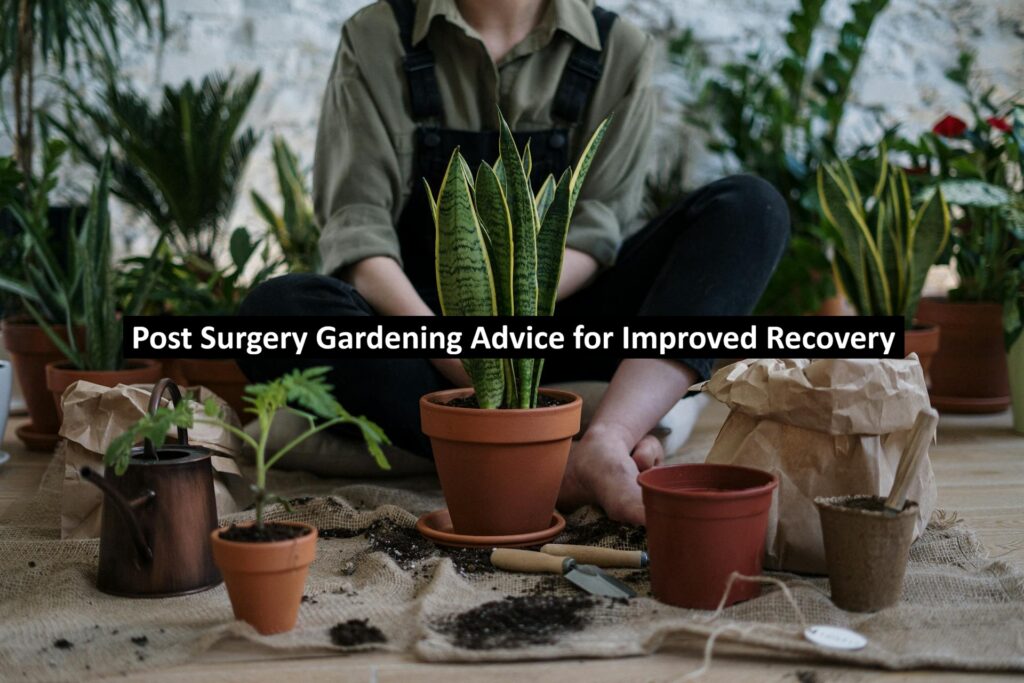
Post Surgery Gardening Advice for Improved Recovery
If you’ve suffered from any form of physical injury that prevents you from doing the things you love, you’ll understand just how different of a time it can be. Finding ways to adapt after a surgical procedure, so you can still partake in your hobbies, will be very important for your physical and emotional wellbeing as you go on your rehabilitation journey. You need to ensure that you take steps in making gardening easier for you, helping you to deal with whatever surgery you have gone through.
Generally, it is advised to wait 3-6 months for heavy gardening after major surgeries like joint replacements, but light activities like container gardening or watering can often start sooner with your surgeon‘s approval. You should always take your healthcare professionals advice when it comes to going back to your daily activities, so that you don’t aggravate your surgical site and can recover to your best ability.
This guide will provide you with the relevant advice as to how you can continue with your gardening post surgery, so you can improve your chances of recovery while enjoying one of your hobbies. Continue reading to learn more.
Read: Why Personalized Lead Gen Wins Over Cold Outreach in 2026
Post-Surgery Gardening Strategies
Prioritise Safety
Improving garden safety after surgery involves adapting your environment and routines to prevent strain, falls and infections that can make your recovery prolonged. Before starting, verify with your physician when you can return to gardening. If you’re doing light gardening at home, you can usually return to this within a few weeks, depending on the type of surgery. However, if you’ve had a procedure like a hip or knee replacement, it could be weeks before you are able to start again.
Here’s certain ways that you can adapt your garden to make it safer to use:
- Raised beds to minimise bending or kneeling
- Create clear pathways
- Try container gardening
- Vertical gardening setups
- Wear protective clothing
- Take your time and don’t rush
Adaptive Tools
Post-surgery gardening requires tools that minimise bending, lifting and strenuous gripping. The best adaptive tools focus on extending your reach and providing ergonomic comfort to protect your joints and muscles. The last thing you want is to be using small tools that require you to get on your hands and knees, as this can make your post-surgery injuries worse if you haven’t fully recovered yet.
Getting long-handled variants of specific gardening tools like heavy duty hedge trimmers will be the most effective for allowing you to cut low hedges without having to bend or kneel. Arm Support Cuffs are also ideal if you have had any form of hand or wrist surgery. These plug into Easi-Grip tools, transferring the weight of the tool to the forearm, providing greater control and comfort.
Modify Workflow
Making changes to your workflow will be needed after you’ve undergone surgery, as you won’t be able to do everything you could before the procedure. If you used to spend several hours in the garden, this’ll need to be modified so you’re doing much shorter stints that have less physical impact on your joints and muscles. The perfect balance for you could be doing 10-20 minutes of gardening and then interchanging that with 20 minutes of break time.
Focus on lighter duties like pruning or watering when you’re gardening and avoid heavy tasks like digging or lifting large bags of soil. The latter can put a lot of stress on your body while you’re recovering and prolong the amount of time it takes you to get back to normal. If you must reach, use the unoperated side to leverage and keep heavy items close to your body.
Create an Indoor Garden
If you’re unable to move around your garden easily after a surgical procedure, the best alternative is to create a small indoor herb garden instead where you can reach all of the plants and tools you need very easily. You can sit at your table and design potted plants for a fun gardening task without the restraints of having to go from one end of the garden to the other.
There’s many health benefits of an indoor garden, as it can improve the air quality within the home, which is the place you’ll spend the most time during your recovery. It’s also proven to reduce stress and keep you calm as you go on your rehabilitation journey.
Listen to Your Body
When you are gardening post-surgery, always make sure to listen to your body and when it’s feeling uncomfortable. If you’re planting flowers or mowing the lawn, you should always stop as soon as the surgical site begins to hurt so you can give yourself the break you need. Feeling pain as soon as you complete a certain movement is a sign that you should avoid doing that again until you have fully recovered.
Consulting your doctor will give you the best knowledge as to what your body should be capable of doing during your recovery. This can help you make a plan that will best suit your body.
Physical and Mental Health Benefits of Gardening
Therapeutic Movements
Gardening offers therapeutic movements similar to physical therapy, assisting with flexibility and strengthening. Reaching for weeds, pruning branches and planting seeds acts as a stretching routine that loosens tight muscles and improves joint flexibility that can aid your recovery. However, if you stretch too much, you can aggravate your surgical injury and prolong your rehabilitation.
Reduced Stress
Engaging with nature can reduce cortisol levels and anxiety, which is why biophilic design is currently so popular within homes. Having plants around you provides you with positive feelings, as you aren’t trapped indoors. This is why having a garden in your home is a good idea, so you can get all the benefits without having to leave your property as you recover.
Sense of Purpose
Tending to living things aids in mental recovery and boosts mood. If you’ve started a gardening project before your surgery, being able to complete this after it will give you a positivity boost that can help you to mentally recover from your procedure.
Final Thoughts
Gardening can be the key to your recovery, helping you to boost your wellbeing as you continue to do the things you love. You’ll need the right tools for the job to do this effectively, such as a Stihl Tiller, designed to help you care for your garden without straining your body.