
Why Personalized Lead Gen Wins Over Cold Outreach in 2026
Have you ever wondered why certain emails in your inbox catch your attention immediately while others go directly to your trash? It could be due to the time, the tone, or simply that it was written to you.
Interestingly, research involving more than seven billion emails concluded that emails with subject lines that include a personal name were opened 50 percent more frequently than those without. That’s not a slight difference.
Over the years, sales and marketing teams have been playing with an old playbook. Keep sending enough cold emails, and sooner or later, someone will reply. But in 2025, something feels off. People are tuning out. Inboxes are overflowing. And the actual question is, what in the world makes a person listen today?
Personalization appears to be the answer. It is not only about adding a name to an email, but knowing who this person is and why your message is important to him/her. It is no longer about sending more. It’s about sending better. And the best part is, the insights that we require are right in front of us.
In this blog, we’ll explore why old-fashioned cold outreach is failing, how personalization is turning the tables, and how your website can make a difference in smarter lead generation.
1. Why Cold Outreach Isn’t Working Anymore
Having already observed the effectiveness of personalization, the question of cold outreach arises. It has been the most used strategy. Send messages enough and hope some of them stick. However, in 2025, this strategy is less assured.
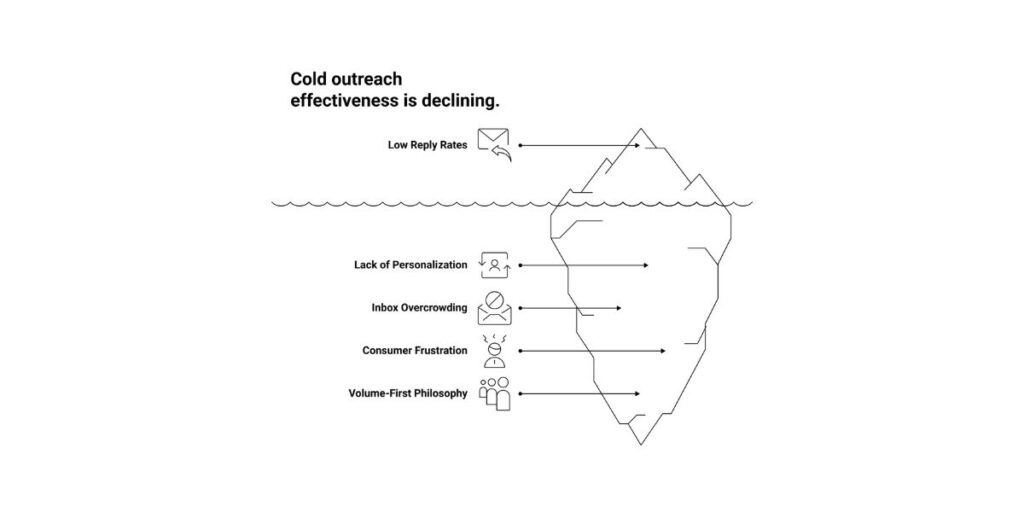
Cold outreach often appears unprepared and lacks context. It makes many assumptions, but none of them are based on an actual signal. Who the prospect is, what they need, and whether they’re even seeking a solution right now is mostly guesswork. And when a message lacks relevance, people can tell. It feels random, easy to ignore, and it rarely leads to a sustained conversation.
Inboxes are more crowded than ever: too many people have had enough of messages that do not speak to their interests, and so they stop opening them or mark them as spam. Belkin’s 2025 data backs this up. It shows that average reply rates in B2B cold emails have dropped to just 5.8 percent, which means that nearly all those efforts go without notice.
Even when emails are opened, they often fail to deliver their intended message. McKinsey shows that 76% of consumers are frustrated with the company’s failures in personalized communications. This frustration adds up. It builds up evidence that makes consumers less inclined or willing to engage with your brand.
We’re definitely observing the shift. The volume-first philosophy is losing its significance; buyers are now envisioning something more imaginative, aligned with modern digital marketing strategies that focus on relevance and intent.
Read: Oil and Gas Asset Management: 6 Ways to Optimize Performance
2. How Personalization Delivers Better Results
What works better? That’s what we must explore because cold outreach is ineffective. And as we have mentioned before, the answer is personalization, not that personalized marketing trends, but a personalized human connection.
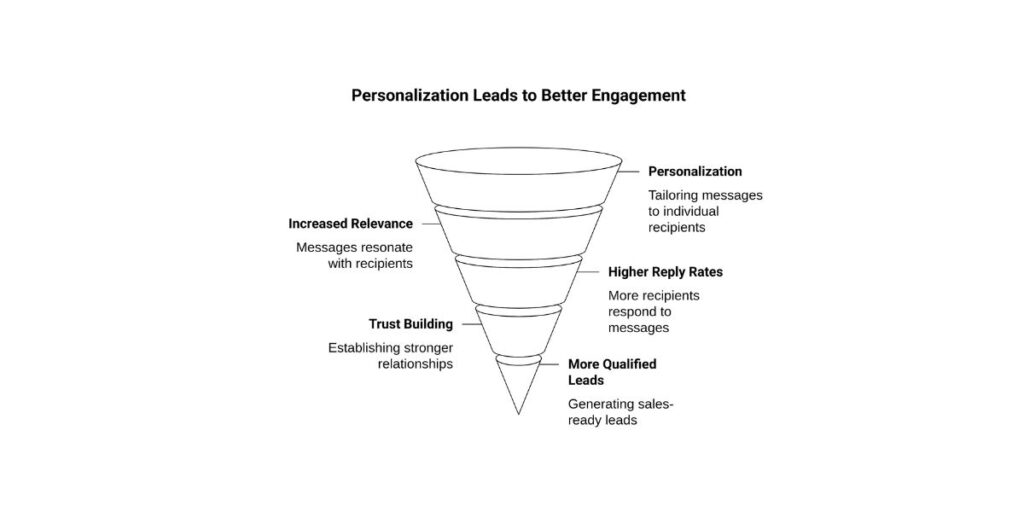
Think about your own inbox. What makes you pause? Most messages aren’t the ones that were sent to many people; they are those messages that come through as having some relevance to the recipient, those written as if they were speaking to you directly. That spare moment of recognition can mean the difference between reply and delete.
Amongst a flood of messages, personalized messages shine through. They show intent and effort. More importantly, they help people feel noticeable. That is more important than ever, particularly when it is difficult to get attention.
The data backs this up. A research report by Backlinko that analyzed twelve million outreach emails discovered that personalized message bodies received almost 33 percent higher replies compared to non-personalized messages. This is a sure indicator that relevance works.
There’s also a deeper benefit. Cold messages feel transactional but personal ones feel much more like conversations. They build trust. Create opportunities. And over time, they develop stronger relationships between you and your audience.
Forrester Research has cited that all of these tend to be true. Nurturing leads with relevant content increases qualified leads, and companies usually see 50 percent more sales-ready leads by doing so, at the same time as reducing their cost per lead by about one-third. It’s not just that you get all these better leads; you do it more cost-efficiently.
3. Where the Best Personalization Data Comes From
Now that we’ve talked a lot about the benefits of personalization, you’d certainly like to know: Where does all of this great information come from?
Most teams begin by researching each prospect individually. By simply scrolling through LinkedIn or looking at a blog by a company, one can gain valuable insights. However, that strategy might suit some key accounts, but it will be challenging to scale.
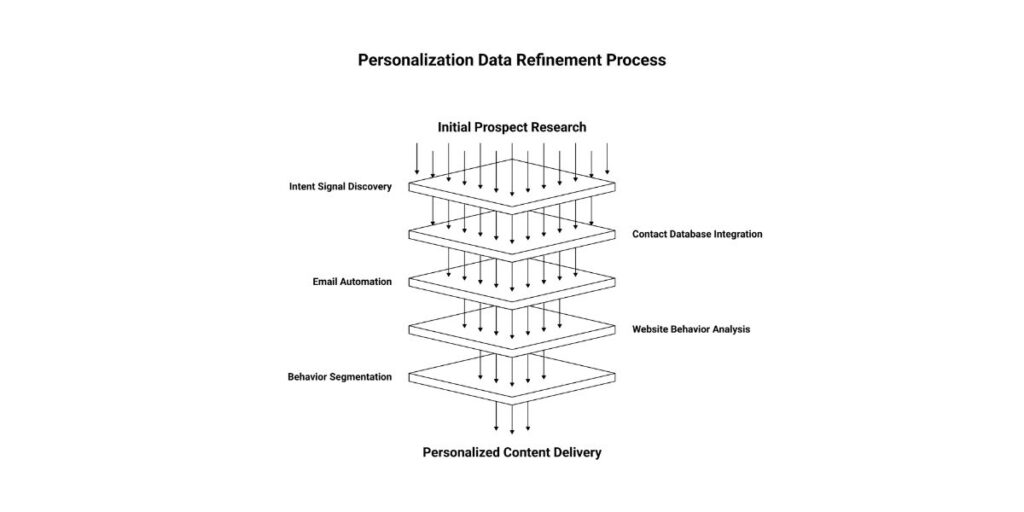
To fix this, teams rely on tools. They identify intent signals from external platforms, compile those lists with contact databases, and integrate the results into the email automation tools. This is a very clever and effective way of doing things compared to the old shoot-in-the-dark method. But in essence, it still is cold. You’re talking to people who probably never heard of your brand, let alone remember visiting your site.
Meanwhile, your own site is silently scooping some of the most valuable intent signals you might ever desire. Every visit tells a story. The pages visited, the blogs read, and the time spent on the pricing page. These are the actions that mirror genuine interest and occur in real time.
And the best part: You don’t have to track anything manually. Web personalization platforms are designed to observe such patterns. They categorize visitor behavior into distinct segments, such as visitors from financial companies exploring compliance features or returning visitors comparing pricing plans.
Platforms like Fragmatic and other customer data tools turn these patterns into something sharable. They cluster visitors by behavior and interest, allowing you to respond with content that matches their needs and location promptly. Instead of a cold list built from scratch, you are warming leads that have shown an interest.
4. Turning Website Behavior Into Smarter Outreach
Each action taken by the visitor is essentially a clue; with the right tools, these clues can be transformed into something truly valuable. But insight is just the beginning. What next? How can you use it to communicate more effectively and meaningfully?
This is when it becomes interesting. Modern marketing tools are no longer single. They are designed to work together. What this means is that the valuable behavior your personalization platform has learned does not need to be confined to a single place. It can be circulated through your stack and contribute to the formation of the next move in your outreach.
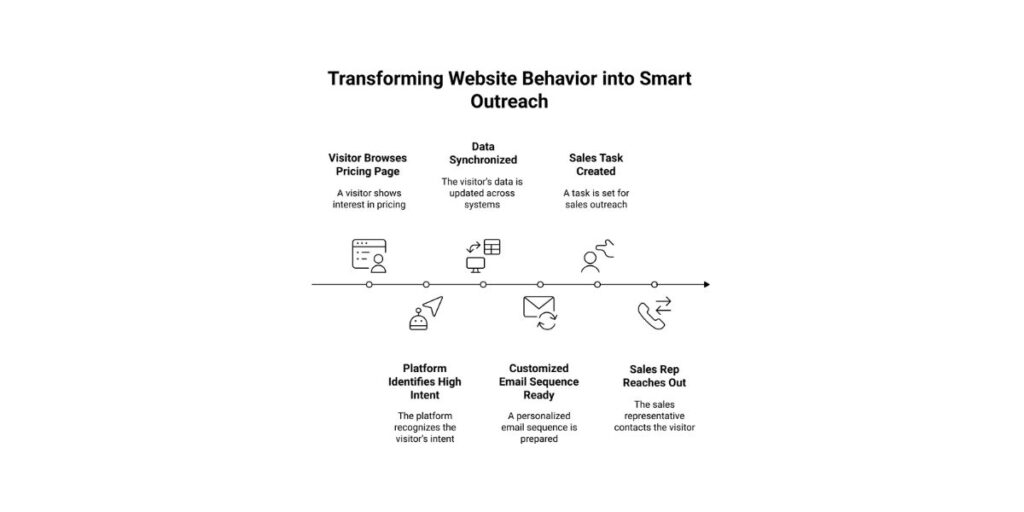
Imagine this. One of the visitors arrives at your site and browses on your enterprise pricing page. Such a behaviour makes them a high-intent segment. The platform identifies this immediately, rather than being flagged by one of your team members manually. It is, however, instantly captured by the system and synchronized with the contact record in your email or sales tool. And just like that, a customized email sequence is ready to go. Or, a task is created for the sales rep to reach out with the right message at the right moment.
It seems personal. However, it is driven by automation. In fact, due to being based on actual behavior, it deters the usual pitfalls of cold messaging. There is no more guesswork; you are following up with someone who has already shown interest.
Here, HubSpot, Outreach, and Salesloft shine like stars. When integrated with web personalization tools, these platforms evolve from being simple delivery mechanisms into highly intelligent companions for creating emotionally intelligent communications that understand what someone truly wants to know, rather than just what you want to say.
5. Business Impact of a Personalized Approach
The combination of truly understanding your visitors’ real actions and aligning tools and messaging is another powerful thing. By doing this, you start to attract leads already interested in your product and services who are way more inclined towards taking a step further as your message meets them where their need is.
This also fastens up sales. When the right message reaches the prospect at the right time, convincing is unnecessary. The prospect already has some intent on their mind. That is when your team gets a head start.
HubSpot found that personalized calls to action outperform generic ones by over two times. According to The Annuitas Group, nurtured leads usually make way larger purchases than their un-nurtured counterparts.
This is the real strength of personalization. It improves lead quality, helps you build trust quickly, and increases the value of each conversation.
Conclusion
Cold outreach is dead. While basic personalization is welcome, outreach should be guided by website behavior. If teams act on these intent signals, they move quickly and have much higher conversion rates.
For marketers aiming to improve lead quality and efficiency, the advice is simple. Look at what your visitors are already doing. That data is the starting point for building more intelligent, more effective conversations.
Author’s Bio:
Vidhatanand is the Founder and CEO of Fragmatic, a web personalization platform for B2B businesses. He specializes in advancing AI-driven personalization and is passionate about creating technologies that help businesses deliver meaningful digital experiences.